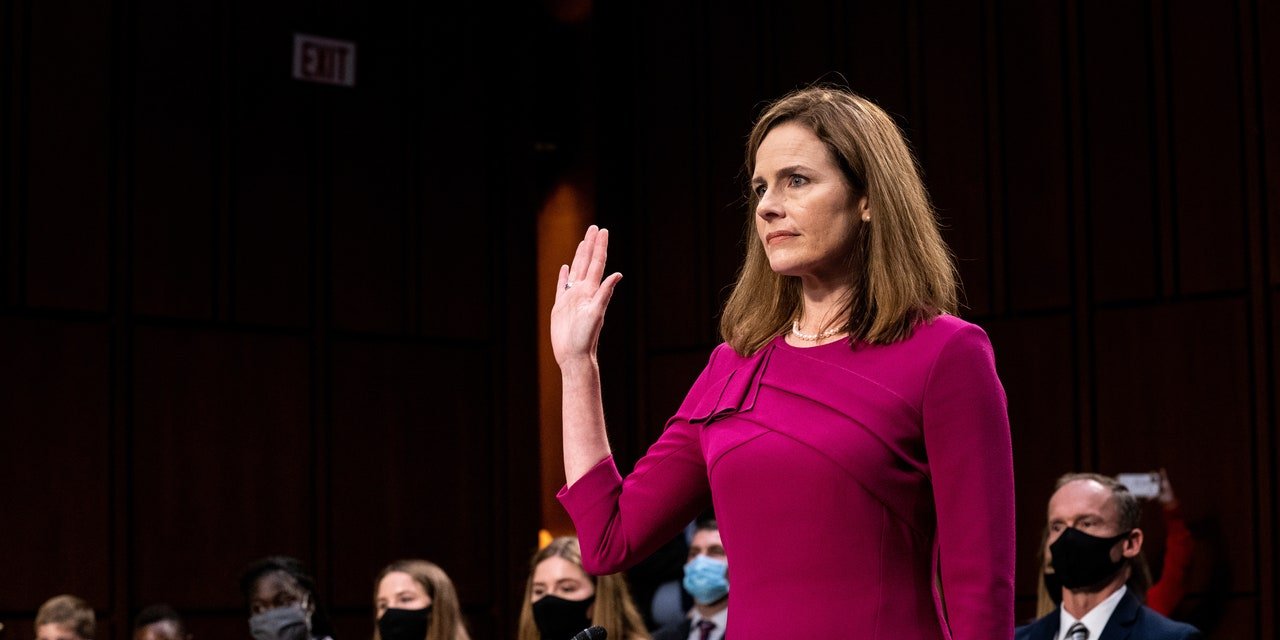
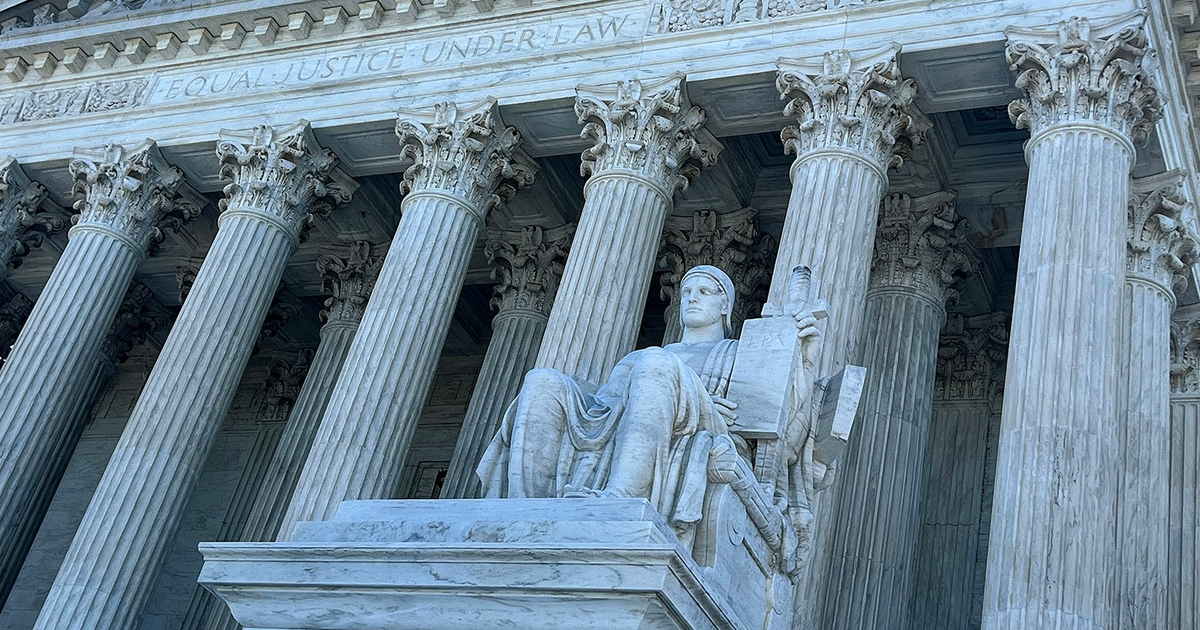
In her professional career, Barrett says she holds the same judicial philosophy as Scalia, who dissented in Obergefell v. Hodges, the Supreme Court ruling that ruled same-sex marriage is guaranteed by the Constitution. In a lecture she gave as a Notre Dame law professor in 2016, Barrett defended the Obergefell dissenters. She said that Title IX protections for transgender Americans were a “strain on the text” and suggested that laws on marriage equality should be left to state legislatures, not the courts. The case’s plaintiff and defendant, Jim Obergefell, called Barrett’s confirmation a “human rights emergency” in an October opinion piece in The Washington Post. During her Senate Supreme Court nomination hearings, Barrett declined to say whether she agreed with the Obergefell decision. “I don’t think that anybody should assume that just because Justice Scalia decided a decision a certain way that I would too,” she said.
In a letter to Senate leaders this October, dozens of disability advocacy groups objected to Barrett’s nomination to the Supreme Court. The groups noted that Barrett seems primed to overturn Obamacare, which could be disastrous for the 28.9 percent of families who have at least one disabled family member, according to census data. The ACA has supported people with disabilities through its protections for preexisting conditions, Medicaid expansion, coverage of mental health services, habilitation services for people with intellectual and developmental disabilities, and protections against disability discrimination, the letter notes.
Earlier this year in a ruling as a circuit judge, Barrett dissented against the decision in Wolf v. Cook County, which banned a recent Homeland Security rule that made it more difficult for immigrants with disabilities to come to the U.S. or become permanent residents by considering them a “public charge.” The majority opinion said that the rule violated the Rehabilitation Act of 1973, which makes it illegal for federally-funded programs to discriminate based on disabilities, concluding that it “penalizes…[and] disproportionately burdens disabled people.” Barrett also joined a 2019 decision, P.F. v. Taylor, which ruled that the state of Wisconsin didn’t discriminate when it said that kids with learning disabilities who applied to transfer to a school district outside of their residential area could be denied a transfer application if the school lacked the “services necessary to meet those special needs.”
On contraception
During her Senate Supreme Court nomination hearing, Barrett said she doesn’t think that the 1965 Supreme Court ruling in Griswold v. Connecticut—which legalized contraception in the U.S. and paved the way for Roe v. Wade—is “in danger of going anywhere.” However, as with other Court rulings, Barrett refused to say whether she believed the Court reached the right conclusion. Her personal views on the topic have raised concerns: In 2006, Barrett signed an advertisement created by the anti-choice organization St. Joseph County Right to Life (an organization that also wants to criminalize the discarding of unused embryos from the in-vitro fertilization process) stating that “life begins at fertilization”. This stance views some forms of contraception, including intrauterine (IUD) devices, as unacceptable.
This means, you take one article, and you use the article distribution system. It will generate thousands of unique versions of your article, and publish those unique articles to hundreds of websites that are related to your niche.
Take a look at our comprehensive guide to the best and most popular information ebooks and products available today on Detoxing, Colon Cleansing, Weight Loss and Dating and Romance. They are all in one spot, easy to find and compere to make a quick selection for the product that best fits your needs or wants.
So browse through a category and make your preferred selection and come back here to read more choice articles and get a few more helpful tips on ways to help your enhancement.
As an Amazon Associate I earn from qualifying purchases. “saubiosaubiosuccess.com is a participant in third party affiliate and advertising programs; The Amazon Services LLC Associates Program, Awin network, and other affiliate advertising programs are designed to provide a means for sites to earn advertising fees and commissions by advertising and linking to products on other sites and on Amazon.com. Amazon and the Amazon logo are trademarks of Amazon.com, Inc, or its affiliates.”
We use anonymous cookies and various 3rd-party services to optimise and to offer you a better, more personalised, browsing experience with advanced accessibility enhancements.
Dismiss
Always active
The technical storage or access is strictly necessary for the legitimate purpose of enabling the use of a specific service explicitly requested by the subscriber or user, or for the sole purpose of carrying out the transmission of a communication over an electronic communications network.
Preferences
The technical storage or access is necessary for the legitimate purpose of storing preferences that are not requested by the subscriber or user.
Statistics
The technical storage or access that is used exclusively for statistical purposes.The technical storage or access that is used exclusively for anonymous statistical purposes. Without a subpoena, voluntary compliance on the part of your Internet Service Provider, or additional records from a third party, information stored or retrieved for this purpose alone cannot usually be used to identify you.
Marketing
The technical storage or access is required to create user profiles to send advertising, or to track the user on a website or across several websites for similar marketing purposes.