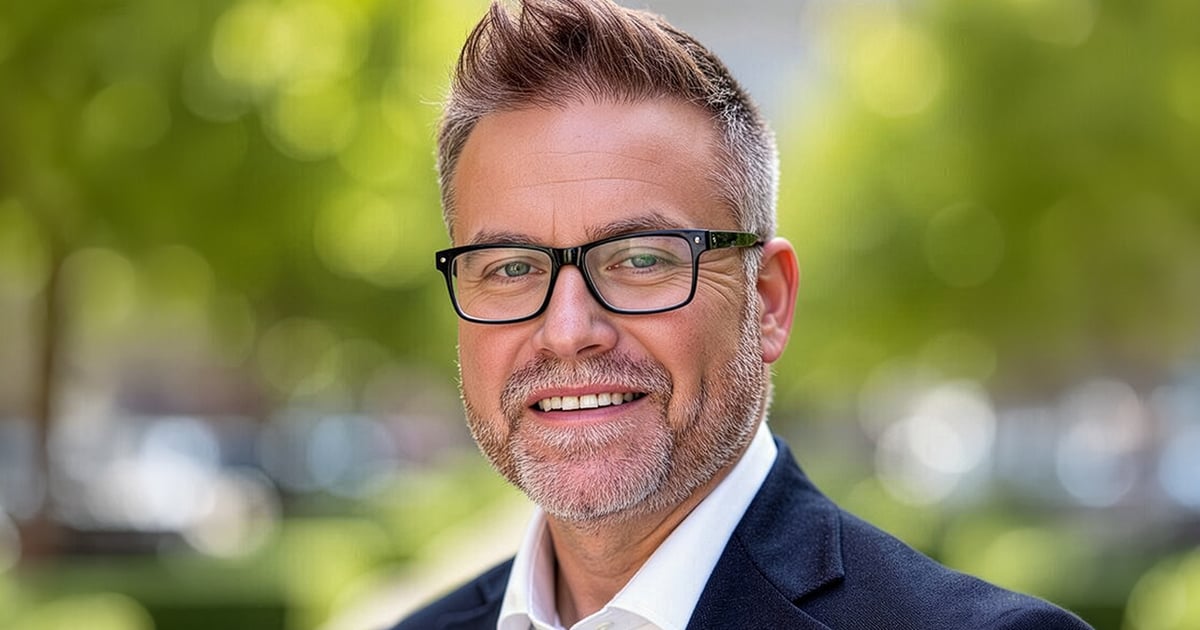
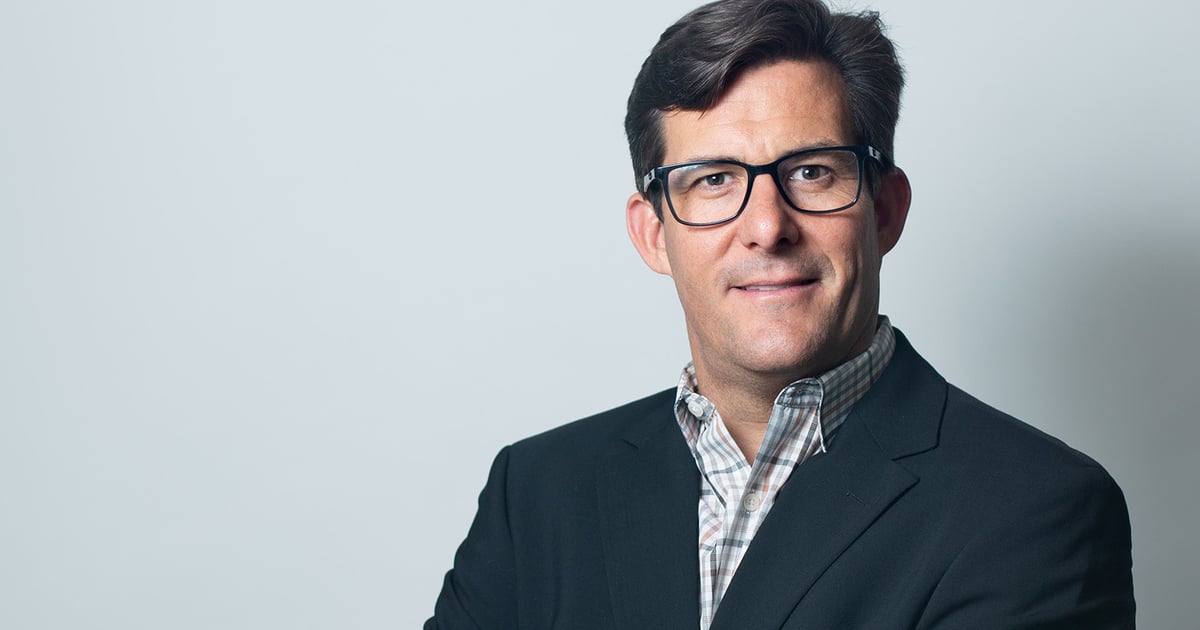
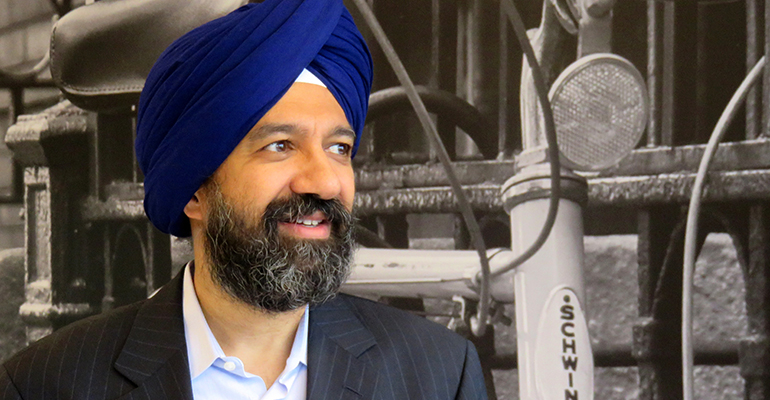
Marketing technology company FMG is at an inflection point. In September, Chicago-based private equity firm GTCR closed on its acquisition of FMG and appointed Mark Casady, the former CEO of LPL Financial and co-founder and general partner of Vestigo Ventures, as FMG’s executive chairman.
Then, earlier this year, the firm appointed Dave Christensen, FMG co-founder and former chief product and strategy officer, as CEO, succeeding Scott White, who held the role for the last decade.
Christensen has a vision for the company to use artificial intelligence to solve problems FMG couldn’t solve before. In an interview with Wealth Management, Christensen discusses his strategy for the firm going forward, which includes opening FMG’s ecosystem to additional tool categories, moving up the funnel to support advisors’ initial prospecting, and plans for more M&A.
The following has been edited for length and clarity.
Wealth Management: What’s your strategy for FMG going forward?
Dave Christensen: We’re at this inflection point in the industry around AI. When we started FMG, we were trying to solve a problem. In my opinion, the best businesses are passionate about a problem and not a solution. And the problem we were passionate about solving was how to help an advisor in a world where marketing was getting a lot more complicated.
The problem, and then the solution we figured was, first, we have all these different channels. We just need to give them one tool that solves all those things in one spot. If they want to do social, they need to do it in the same place where they’re doing email, in the same place where they’re managing their website.
What’s changing now? We ran into many problems along the way that we tried to solve, but we simply could not. They were impossible.
What’s amazing about AI is that it started to unlock some things that we didn’t actually have a solution for before. For example, we had this problem where we had given advisors solutions to post content on social media. Folks like Samantha Russell had taught them exactly how to do it and what to say when they posted it, but we couldn’t create all that content for them. So advisors would go to post a piece of content, start to write the caption, and then once they looked at what they wrote, delete the caption, try again, delete it, and in the end, not write a caption at all and just post a link to a piece of content that would then never get looked at on social media.
Along comes generative AI, and we could take all of Samantha’s best practices and embed them into the AI, create a draft of what that caption looks like in real time and let them edit it from there. We saw a 1,000% increase in usage overnight when we released it. And that was sort of an ‘aha moment’ for our whole company that was, ‘Hey, things that we had marked as impossible and left on the shelf, we need to pull all that stuff back off the shelf because things are possible now.’
If you’re going to summarize what is a guiding principle for me, leadership into this next period with GTCR, for the next three to five years, what am I really focused on? Pulling off the shelf all the impossible things and making them possible again, and just re-imagining what this entire experience could look like for an advisor. We want to see a world where advisors can work and service more clients than ever before because technology makes them infinitely more efficient. We think it is well within reach at this point, but it is going to require us to do the hard work that we’ve always done of building or acquiring the right tools, integrating them into the all- in-one solution, blending AI in the entire process.
WM: What does your product roadmap look like?
DC: If you think about where FMG sits in the tech stack today, our anchor is picking up prospecting at the point where you want to nurture them. So if that prospect wasn’t ready to immediately have an appointment with you and hand you a check, the point where you start nurturing over time that prospect and drip useful information to them, we pick up there. We handle everything there through ongoing client relationship management. The places we haven’t gone are farther up the funnel, actively helping with initial prospecting and driving some of that prospecting directly into appointments, so the advisors can really see the entire journey from prospecting all the way through to AUM.
And that requires integrations with a lot of places in order to pull that off because every independent advisor is very diverse in the tech stacks they use, in the portfolio management products that they use. And so, to really tie that all together, we need a ton of additional integrations, some product development and some acquisitions to build that vision.
You’ll start hearing a lot about FMG Connect, our partner program. We brought Michelle Feinstein into my old role, who built out fairly complex partner programs at Salesforce. And so we’re actively working on that right now and making our entire platform available to some of these partners so they can use it for their communications, and we can get access to the information we need to tie that whole journey together for the advisor.
The other focus for us is on advanced research around AI and personalization. For example, we just acquired Testimonial IQ. We believe that testimonials are an important part of your answer engine strategy moving forward. At this point, the amount of traffic moving to answer engines is accelerating every single month, and those advisors who aren’t doing testimonials are going to be at a serious disadvantage compared to those who are. We want everyone to have access to this technology so they can show up well on answer engines.
We’re building that out, and then we’re talking to our partners about those integrations. One thing that surfaces from the AI notetakers is, “Hey, we are recording all these meetings and our AI is constantly saying, ‘this moment when so- and-so said this, that was an amazing testimonial for you.” But it was a verbal testimonial recorded in a meeting. How do we take that and turn it into something you can actually use?
Through this partnership with FMG Connect, now we’ll be in a world where that notetaker can say, “I’m just going to take this chunk out and fire it over to FMG, and they’re just going to take care of the rest.” The advisor can ask the client whether or not they want to allow that to be a testimonial. The client can say “yes,” and then we can run it through the entire workflow so that it shows up on their website as a testimonial that’s all automated, and they don’t have to do anything with it.
We send communications to investors 16 times a second. There’s a lot of communication happening from our platform, and we believe we could do a much better job now with AI of tuning those communications to the exact needs of each individual recipient as we learn more about them. Doing that at scale and in a compliant manner is a big part of our roadmap as well.
WM: Can you expand on FMG Connect? How will it work exactly?
DC: What we’re looking at doing is working with all of these different categories of tools to open our ecosystem up. So they could do something like embed directly in their product a texting interface so that you could text right natively with a client, but it’s powered by FMG. That’s what is powering it behind the scenes. They didn’t have to build all the infrastructure out, but they can use it and embed it or be able to reach out to us and give us that insight around testimonials, and we’ll automatically handle that workflow for them and take care of it. And what they’ll also be doing for us is they’ll be giving us an insight about that client that we can add to all the insights we already have, which helps us personalize the content more over time. It’s a very symbiotic relationship.
They’re getting the benefit of our infrastructure to communicate, and we’re getting more insights about each individual client that help us personalize.
WM: When you’re talking about the personalization of content, what might you do there in terms of the technology? Is that a product you would develop?
DC: Yes, we’re interested in using our FMG Labs concept to develop some of those core infrastructure technologies in-house, but we are also both partnering and acquiring to round out areas that don’t make sense for us to reinvent. And the way I think about it is in an ideal world, to really personalize content, we have to know a few things. We ideally know exactly how the advisor wants to communicate.
So we need to really be able to nail the way they sound in writing, the way they sound when they’re speaking, and the way they ultimately look in video, because we do believe that personalized video avatars of folks doing mundane work in the marketplace are definitely coming. Audio is actually there. Video’s not quite there, but it’s coming. We want to be the company that knows that about each one of our clients. And so when one of our partners says, “I want to communicate through your platform,” they can know that we absolutely will communicate it in exactly the voice of that particular advisor.
We’re just building it now into a repeatable structure that we can use for content personalization, and we’re working hard with all of our compliance partners to adopt our AI compliance solutions like Overwatch, which helps make personalized content at scale more possible because that’s the other problem. If we start personalizing the heck out of all of our content, compliance departments will cry uncle because now all that has to be reviewed. So we need to help the compliance teams find a way to review customizable content more efficiently. Overwatch is our solution to that.
Another thing is medium personalization. What format does the person like to be communicated in? There are a lot of clients who don’t want to get another email. They just want a text message. So in that case, we have to take the concept that you want to communicate, and we have to be able to put it in any format at any time and then communicate it in that format effectively in your voice.
One of the other pieces of personalization is behavioral personalization. We want to know how a person thinks and how they want to experience the content. So even in an email, we know that some of our customers’ clients want to receive a very analytical email that’s short and to the point. If I tell a big story in it, they zone out. Other clients really want to hear it in a narrative or story-driven format, and that’s the way they want to consume it. So communication becomes more powerful when you understand the way in which the individual wants to receive it, and you could tailor the message specifically to the way they like to receive communications.
WM: What are your plans around M&A? Mark Casady said that the company would look at lead generation and CRM tools to acquire.
DC: We believe that the traditional categories of software are going to collapse over the next three years, because AI just makes it easier to write code and easier to do things that used to be impossible. So the best companies are kind of reimagining the problems with AI as a solution, and that’s going to change everything. So, do I think that, essentially, the function of a CRM is still going to be here in the future? Yes. There has to be a place where you store information about your clients so that you can work with them at scale.
But do I think CRMs will look a lot different in three years? Yes, and I think the CRMs know this, and they’re developing in that direction. And I think new companies coming on the market are kind of starting from that direction. And I think every product is going to care more about that information than ever before. As we start to store all of these insights that are provided to us, as we start to store all of this information about an individual contact, a client, and how they want to be communicated with, and what mediums they want to be communicated with, and what the last thing you were talking to them about so that we can continue to send that kind of communications to them, we technically are kind of moving into part of what would have historically just been the CRM space.
We don’t want to replace the CRM. We’re going to continue to integrate with CRMs, but there are probably pieces of that stack that we’ll either build or buy as we move into that space. And then the same thing with lead gen. When we come up the stack, up the funnel, we are interested in tools that help with lead gen and nurturing those leads all the way through to the place where our product picks up today. There will probably be acquisitions that we look at around that space because lead enrichment and lead qualification is something that we’re really excited about. And that’s another data set for us that helps us personalize communications. What we’re already doing is creating marketplaces for the pieces that we don’t want to own. If you’re a midsize RIA, there’s a chance you don’t pick a particular lead acquisition channel. You might use SmartAsset, Zoe and something else and Google, but what you would love is a world where the leads that you’re getting from all of those systems all go through the same process for nurturing and ultimately end up in the same space, instead of having to have all these different processes to manage that. Large enterprise customers have been doing that forever. FMG gets leads from a thousand sources, and we all nurture them in exactly the same way.
Most small businesses have struggled with that, and all of these tools have different ways to handle that. We want to solve that by allowing all of those sources of leads to live in a marketplace inside our platform, where integrating with them is easy, and you can use as many of them as you want. But our tool can help you with everything that has to happen after the fact. And so that’s kind of how we’ll carve that out. So we want to kind of own the workflow and the process. We don’t necessarily need to own the actual folks that are out there attempting to generate new prospects in the marketplace. We think advisors will always want a big selection of those, and they’ll want to be able to work with many at once.
The same thing is true with content. There’s going to be lots of great content created, probably more so than ever with AI. We also want to be a content marketplace, a place where anybody who produces content can get it in front of 100,000 advisors and have the option for them to use that content within our ecosystem.
We’ll release our first content partners in the second quarter, and the lead marketplace is also in open discussions through that partnership program.
WM: Part of Mark Casady’s job was to cultivate enterprise partnerships. How is that going?
DC: If you think about the trajectory of our company, we made a very strategic decision when we started to focus on individual, independent financial advisors. It really helped us test our product and make sure it worked without bias from large enterprises. We scaled one advisor at a time all the way up till we kind of owned that part of the market. And then we made the choice to go upmarket. And in the last five years, we’ve really done a lot in what we would call the mid-market. That’s a lot of banks, credit unions, mid-size RIAs, and then large enterprise customers. And we’ve had a lot of success in the last three years taking over contracts of large enterprise customers.
That’s an area that we think we can really accelerate and want to accelerate, and Mark brings a lot of connections in this space to help that. This is an inflection point in the industry. Everybody wants to know how to adopt AI in a meaningful way, how to use it to actually impact advisors, and how to help them scale. Organic growth is everything right now, and that’s the very problem we’re trying to solve.
WM: How has the company grown lately in terms of headcount or employees that you’re bringing in? How many do you have now?
DC: If you count contractors, we’re sitting at the 400-plus range as a company. We have historically kind of fluctuated in the places where we are investing. We’ve invested heavily over the last few years in our engineering teams because of what’s going on with AI. Right now, we’re spending quite a bit of time also investing in sales, marketing, and the client success part of the organization.
As we are bringing on a lot more customers, we need to make sure that we also invest in the infrastructure to keep them happy over the long run, and then I’m doing both at the same time. In the past, I’ve made mistakes of saying, “Let’s invest in sales and marketing now, and then as we get the customers, and then we’ll invest in client success.” And I learned you can’t really do it that way, because the experience they have with success early on sets the tone for how it is for the rest of their time with us.
WM: What are your thoughts on Anthropic’s entrance into wealth management?
DC: Anthropic’s been a partner for us and one of the primary foundational models that we use on a regular basis. So we’re excited about it. Having a foundational model want to really focus on an industry vertical means that a lot of things that we have to add to other models in order for it to work here may not be things that we have to focus on in the future anymore. That’s great for everybody because it allows us to just focus on the use cases and the implementations and the orchestration that really matter. We’re partnering with them now, and we plan to partner with them more in the future on what it looks like to actually bring those into the marketplace.
We do imagine a world where advisors in the future may be spending time directly inside the LLM, whether it’s Claude or OpenAI, doing their work, and they need to have access to FMG communication functions and FMG Insights inside that platform instead of inside ours. That is a big part of that FMG Connect that we talked about, allowing our communication platform to be embeddable inside LLMs and inside the native interfaces where people spend all their time so they get all the benefit, but we don’t force them to be inside of our user experience.
Take a look at our comprehensive guide to the best and most popular information ebooks and products available today on Detoxing, Colon Cleansing, Weight Loss and Dating and Romance. They are all in one spot, easy to find and compere to make a quick selection for the product that best fits your needs or wants.
So browse through a category and make your preferred selection and come back here to read more choice articles and get a few more helpful tips on ways to help your enhancement.
As an Amazon Associate I earn from qualifying purchases. “saubiosaubiosuccess.com is a participant in third party affiliate and advertising programs; The Amazon Services LLC Associates Program, Awin network, and other affiliate advertising programs are designed to provide a means for sites to earn advertising fees and commissions by advertising and linking to products on other sites and on Amazon.com. Amazon and the Amazon logo are trademarks of Amazon.com, Inc, or its affiliates.”
We use anonymous cookies and various 3rd-party services to optimise and to offer you a better, more personalised, browsing experience with advanced accessibility enhancements.
Dismiss
Always active
The technical storage or access is strictly necessary for the legitimate purpose of enabling the use of a specific service explicitly requested by the subscriber or user, or for the sole purpose of carrying out the transmission of a communication over an electronic communications network.
Preferences
The technical storage or access is necessary for the legitimate purpose of storing preferences that are not requested by the subscriber or user.
Statistics
The technical storage or access that is used exclusively for statistical purposes.The technical storage or access that is used exclusively for anonymous statistical purposes. Without a subpoena, voluntary compliance on the part of your Internet Service Provider, or additional records from a third party, information stored or retrieved for this purpose alone cannot usually be used to identify you.
Marketing
The technical storage or access is required to create user profiles to send advertising, or to track the user on a website or across several websites for similar marketing purposes.