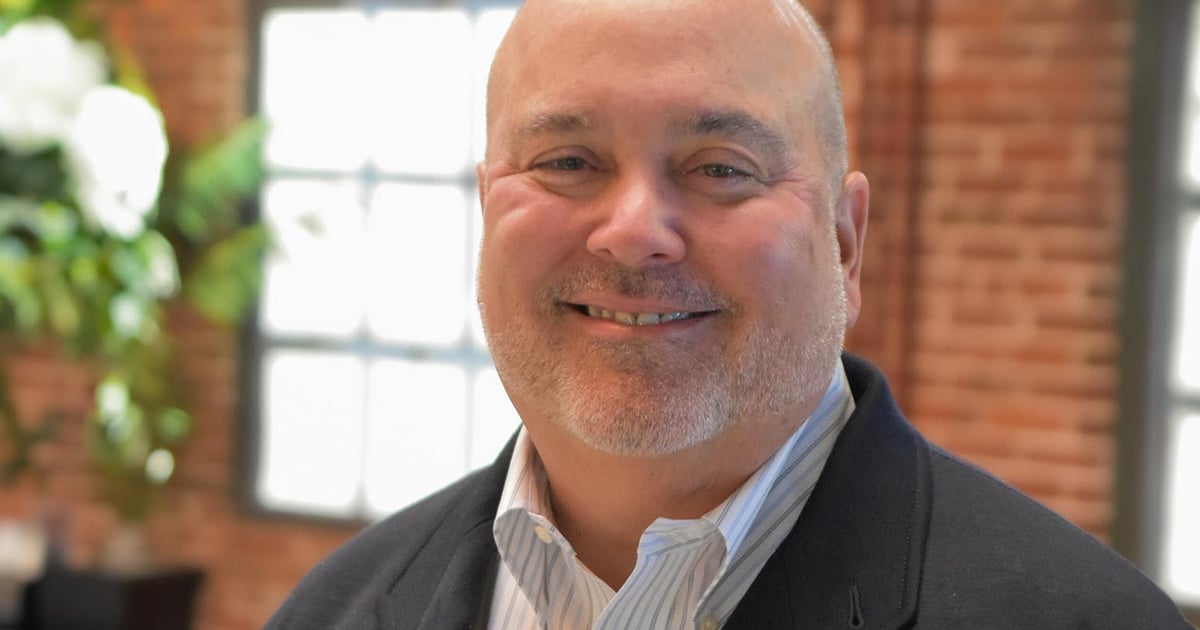
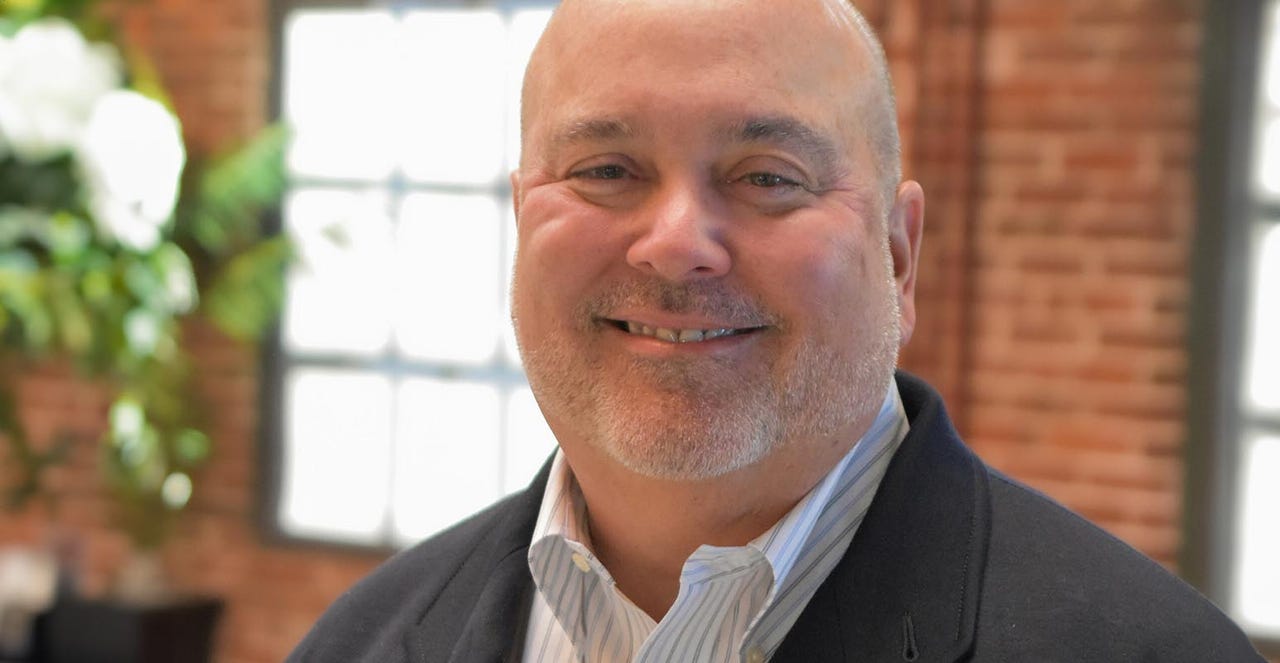
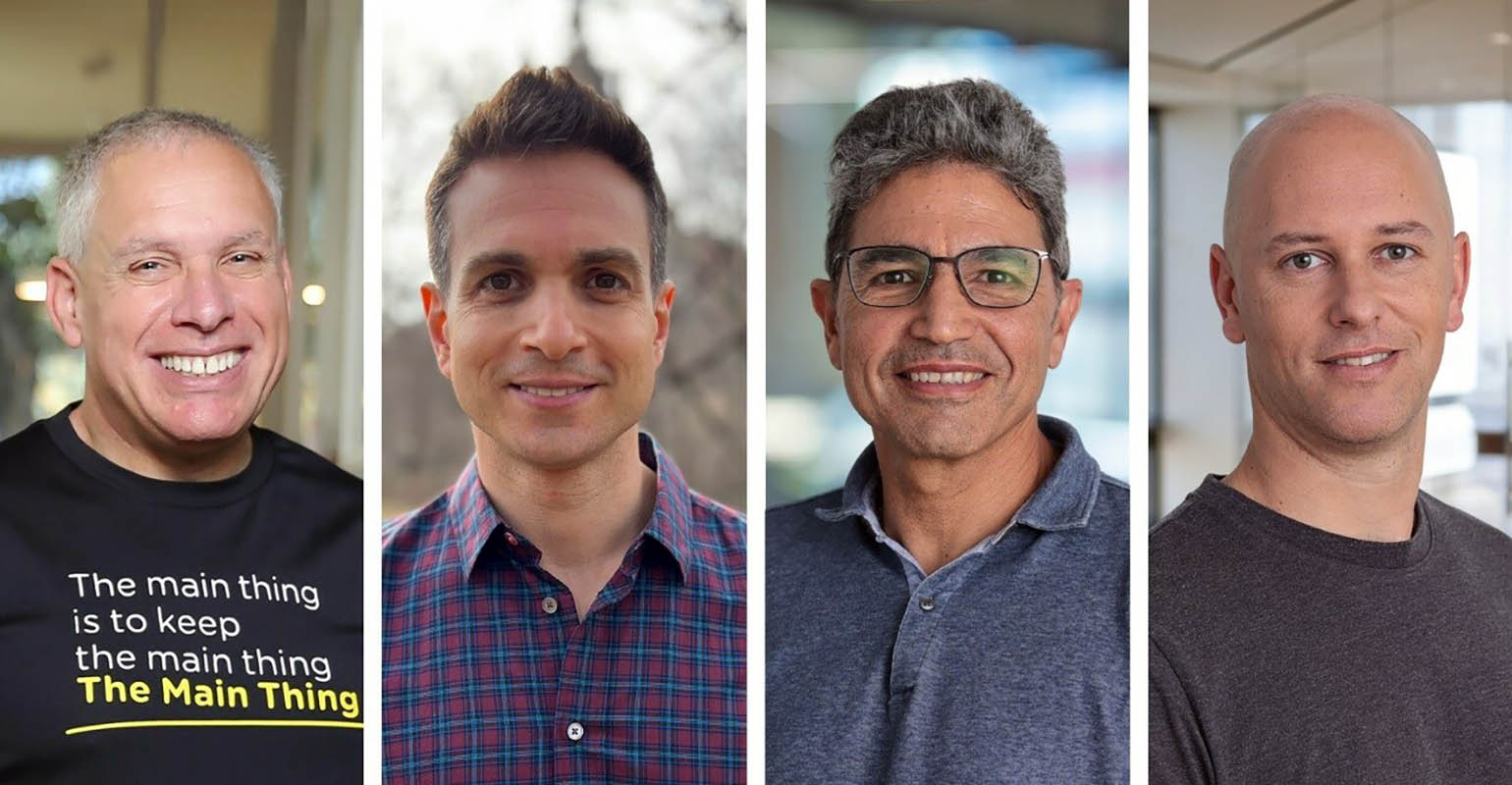
Last week, GTCR, the Chicago-based private equity firm, announced the close of its acquisition of FMG, the marketing technology company for financial advisors. As part of its Leaders Strategy program, GTCR appointed Mark Casady, the former CEO of LPL Financial and co-founder and general partner of Vestigo Ventures, as executive chairman of FMG.
Casady will continue to run Vestigo, the venture capital firm he co-founded about eight years ago. And FMG will tap into his deep expertise in generative artificial intelligence technology to develop AI-enabled products to help advisors do their jobs more efficiently.
After four decades in the financial services industry, Casady also brings a huge network of potential partners and clients, expanding FMG’s reach there. He also led LPL through several major mergers and acquisitions and its initial public offering in 2010.
Casady recently spoke with WealthManagement.com about specific AI projects he’s identified at FMG, the company’s future plans for M&A, the possibility of going public and his thoughts on his former firm’s acquisition of Commonwealth Financial Network.
The following has been edited for length and clarity.
WealthManagement.com: This is a big win for FMG, with you coming onboard. What does this mean for FMG?
Mark Casady: It’s the most interesting time in probably 40 years for wealth management in terms of what’s happening. So if I look at FMG, what I see and what attracted me is a market-leading company supporting advisors in their growth and looking at having a few AI products in the field.
What it means for them is that they’ll be able to tap my AI expertise that I’ve built over the last eight years or so. It’s obviously a hot topic today, but we’ve been investing in it at Vestigo since we opened the doors with our first fund in 2017.
And then secondly, it’s the network I built over a 40-plus-year career in financial services. Often what you find is they may not know somebody at XYZ company, and I may know someone who runs marketing or runs the company, or runs some other wealth division and can be helpful to them in building their network as they take their products out to the marketplace. I see it as a combination of bringing in AI expertise and the network that I’ve built up over many years at FMG, and really leveraging their existing strategy and helping them think through where things are going over time in wealth management.
WM: When you say helping them build their network, are you talking about potential clients?
MC: It is going to be partnerships. They’ve had a big push in the enterprise and RIA space and have been very successful with IBDs, including LPL. It’s really just taking advantage of the network I’ve built in those same markets and helping those individuals understand a bit more about FMG. They know who they are, and they know what they’re doing. But it’s really to make sure they understand how they can be uniquely helpful to their situation.
WM: How do you plan to implement AI at FMG? Are there specific types of tools or features you’re thinking about?
MC: AI is pervasive. Predictive AI has been around since time began; generative AI is the new thing, and you need to know which tool needs to go where and how to use it. And every company has to rethink the way they approach data and the way they approach the use of artificial intelligence. And that’s the part I’m excited by, is take a market leader who’s got a sizable business already and then help them think about how AI could be applied in different ways and in different structures.
One way is the way they’ve done it, which is to build three products: Overwatch, Sidekick, and Muse. They’re in the field today. They’re being used by clients as ways to harness the power of AI to make their jobs easier. We’ve identified a number of projects that could be done, where you can apply AI and make the advisor’s job even easier in terms of the AI doing the work for you. All this is by driving better growth for advisors, and that growth can come in the form of new clients or it can come in the growth of profits through the efficiency that FMG should be able to harness using AI.
WM: Can you provide an example of a project you’ve identified?
MC: For example, on the website today, there isn’t a chatbot. We’re all used to chatbots from our bank and our insurance company, and from other places. But today that doesn’t exist as a technology for advisors to use. We know they would like to have that, but today the only way they can imagine doing it is doing it themselves. But in a world of generative AI, it can do it for you. We could now put a chat box bot on your website and let it answer questions within compliance constraints, and just add that efficiency and discovery that occurs by the use of generative AI in that example.
That’s one we’re working on right now. We’re doing it in partnership with an outside firm, which is a different way to develop for FMG.
When I talk to companies of all shapes and sizes, I prescribe that they do some of it themselves, especially those mission-critical items. That includes the three tools FMG has already rolled out. Take things that are nice features, like a chatbot or a way of communicating with clients on your website, and do that in partnership. You’ll get to market faster; it’ll likely be less expensive; and it’ll give you some leading-edge capabilities.
WM: Who are you partnering with on the chatbot?
MC: It’s Knowbl, and they are a portfolio company of Vestigo, just to be clear. I’ve been helping the FMG team understand where there’s a tool that we’ve vetted. We’ve looked at over 6,000 companies at Vestigo, all mainly AI-oriented, and we’ve invested in 40. So we’ve done a lot of vetting.
I’ll give you another example. All technology has code, but there’s really old code, like I would have to program COBOL. Then there’s more modern code that just doesn’t do well in the cloud, and every company has a bit of that. FMG does as well. And they’re using a company called Blitzy that does that on an automated basis using generative AI as the tool.
If you look at Blitzy and you look at their social feed, you’ll see some of the recent updates they’ve had on their efficiency in that conversion. FMG is doing a Proof of Concept, they haven’t committed fully to Blitzy yet. They’re testing them first and seeing if they couldn’t do a code conversion that they wanted to have done, but was just too expensive to do before.
WM: GTCR mentioned that your addition was part of their Leaders Strategy partnership. What is this?
MC: Some private equity firms have operating partners as part of the partnership. Bain Capital, for example, does it that way. And so, someone like me, a former CEO, would join those firms as a partner. The difficulty for someone like me is, if I’m in that program, I would have to dedicate myself fully to that program. Whereas in the Leaders Strategy program, what GTCR is able to do is what I describe as fit for purpose, meaning that they’re able to find the right person at the right time for the right company, because they’re always available to find that relationship.
It does let them look at a wider variety of people. I’ve had a number of friends who’ve worked with them because it’s less commitment to a partnership and more about commitment to an individual company, which is much more workable for a schedule.
WM: So this is not a full-time gig?
MC: No, and that was important because I still have Vestigo Ventures to run. We have two funds that need to be overseen through their conclusion, which will take another seven years or so. This allows me to spend a couple of days a week on Vestigo, which I need to do. And then about three days a week with FMG, a little bit less. And that’s the commitment that I’ve made contractually with them, is to give them basically half of my business time to work on FMG.
WM: A big part of your role at LPL was leading the organization through M&A. Are you planning to bring that experience to FMG? Are they looking at more M&A?
MC: Absolutely. They’ve done a number of deals over the last few years, and we want to continue doing that. When we look at the front-end of an advisor’s process—finding prospects, onboarding prospects, turning them into clients, communicating to clients and prospects—today they have FMG as a primary partner. But they also might have a hundred other choices of very specialized companies they can work with. And part of our vision here is to do M&A to allow that to be much more seamless and easier for a financial advisor or an insurance agent to be able to undertake.
WM: Are there specific types of firms they might look at?
MC: If we think about categories, there’s lead generation and CRM. There are things like ongoing client reporting, of which there are four or five different flavors that are available, some investment-oriented, some oriented towards generalized content. It’s anything that would be in that communication layer that we’re interested in.
If you look at a parallel, if you look at what Orion and Envestnet, and to some degree InvestCloud tried to do or have done, is taken the middle part of advisor’s practice all around the management of money and that ongoing review of portfolios. That’s all an integrated set of capabilities. They went through this several years ago. This just hasn’t happened on the front end, and I think FMG can be a leader in making that consolidation occur.
WM: Another major part of your role at LPL was bringing that company through an IPO. Does GTCR have any plans to take FMG public? Is that something they’ve discussed?
MC: It’s an option to take them public. We just started the investment period, and usually these are typically at least five years before those things have to be decided. But it certainly would be helpful if that’s the route that we decide to go as we get closer to the point of making that change, and they would hopefully be large enough for that to make sense as an option. There’s also a strategic acquisition that could occur as well, or another private equity firm may very well be interested at that stage. At this stage, everything is open because it’s still early days of the holding period. But I’ve been lucky; I’ve taken three companies public, so it feels like a very comfortable place to be, that’s for sure.
WM: As the former CEO of LPL, I’m sure you’ve been following the company and especially its recent acquisition of Commonwealth Financial Network. Do you have any thoughts on this deal?
MC: I’m very close to the Deitch family, who owned Commonwealth, and then obviously I’m very close to [LPL CEO] Rich Steinmeier and the team at LPL, and I viewed it as a merger of two friends. Two of my best friends got together and decided to create a combined company.
The reason I love it is because LPL has the scale that Commonwealth needed. It has built a big business off scale, and therefore they can create better economics for the Commonwealth advisors in a way they couldn’t on their own. And likewise, Commonwealth has a unique culture of service delivery that frankly I could never replicate at LPL and couldn’t really figure out how to do. I don’t want to speak for Rich, but I think that fact that Commonwealth has such a unique culture around service is a very good thing for them to try to then create on a larger scale at LPL. Now imagine the best of scale economics with the best service model put together. That is a very powerful combination for wealth management.
WM: From where you sit in your role at Vestigo, what areas of the advisor tech market are you focused on right now?
MC: Vestigo is owned by two general partners, myself and Dave Blundin. Dave teaches AI at MIT, so he’s got a very in-depth understanding of how AI is changing and how rapidly it’s evolving. That’s why we’ve been AI forward, because of that background that Dave has.
So when we look at applications in financial services for Vestigo, we look first for amazing founders. We really felt like we learned how to judge the teams that we met and their skills, and their likelihood of creating a very successful company over time. And that’s a lot of art, but there’s also some science in that. The next thing is, we’re looking for a business idea that they have that has a tailwind to it—something propelling that industry forward in some way. In wealth management, for example, it’s the creation of wealth that’s going on. Well, that creates a lot of opportunity for wealth management practices.
There is the crossroads of a deep problem in the technical stack of wealth, where you’re not likely to find an entrepreneur who understands that just yet. And you’re combining that with the unique skills that a generative AI solution would have. We have a company called Domify that works within the compliance organization of a wealth manager and oversees a range of activities. An example would be a complex product process. So without going too technical, something that takes six hours now takes 20 minutes. So you can imagine the cost savings that would represent for the wealth manager.
WM: What do you think will happen to the fintech startups if we slip into a recession? Do you think we’ll see consolidation there, fire sales? Acquihires? Folks just buying the intellectual property?
MC: I don’t think the recession needs to happen; it’s actually happening now. And the reason is, we just have gone through a depression in fintech. So 2021 was an all-time high for companies. At Vestigo, we sold some of our companies into that, because multiples were so high, hard to imagine a better time to sell than then. Then they just dropped in ’22, ’23, ’24, and they’re starting to recover, let’s say in the last year or so. And so, what’s happening now is strategic M&A. Someone’s coming in from a larger company and saying, “I want you to own that business. I like it.”
Then we’re also seeing the other example you have, which I think is a very thoughtful approach and would be a good one for FMG. Let’s say someone’s built a nice technology; they’ve got $1 million in revenues, they’ve been at it five years. That’s a successful company in that they’re surviving, but that’s not a successful company in that it’s going to get big enough to really warrant a large price. So everyone might be better off selling at a reasonable price. I don’t want to call it a “fire sale,” but that isn’t a bad characterization. That allows a bigger company, in my example, to be able to get the advantage of that technology that’s been built and tested in the market. And they then have, of course, so much more distribution they can do in selling that tool to their clients. That’s a really smart strategy for a number of companies, including FMG, and we’re seeing some of that in our portfolio now.
Take a look at our comprehensive guide to the best and most popular information ebooks and products available today on Detoxing, Colon Cleansing, Weight Loss and Dating and Romance. They are all in one spot, easy to find and compere to make a quick selection for the product that best fits your needs or wants.
So browse through a category and make your preferred selection and come back here to read more choice articles and get a few more helpful tips on ways to help your enhancement.
As an Amazon Associate I earn from qualifying purchases. “saubiosaubiosuccess.com is a participant in third party affiliate and advertising programs; The Amazon Services LLC Associates Program, Awin network, and other affiliate advertising programs are designed to provide a means for sites to earn advertising fees and commissions by advertising and linking to products on other sites and on Amazon.com. Amazon and the Amazon logo are trademarks of Amazon.com, Inc, or its affiliates.”
We use anonymous cookies and various 3rd-party services to optimise and to offer you a better, more personalised, browsing experience with advanced accessibility enhancements.
Dismiss
Always active
The technical storage or access is strictly necessary for the legitimate purpose of enabling the use of a specific service explicitly requested by the subscriber or user, or for the sole purpose of carrying out the transmission of a communication over an electronic communications network.
Preferences
The technical storage or access is necessary for the legitimate purpose of storing preferences that are not requested by the subscriber or user.
Statistics
The technical storage or access that is used exclusively for statistical purposes.The technical storage or access that is used exclusively for anonymous statistical purposes. Without a subpoena, voluntary compliance on the part of your Internet Service Provider, or additional records from a third party, information stored or retrieved for this purpose alone cannot usually be used to identify you.
Marketing
The technical storage or access is required to create user profiles to send advertising, or to track the user on a website or across several websites for similar marketing purposes.